
Article: Fashion by the Numbers

Fashion by the Numbers
There have always been rules in fashion, rules that were meant to be broken (eventually) like, no wearing white after Labor Day. Color matching your handbag, belt, and shoes was imperative for a polished woman of the 1950's. There was a time when fashion etiquette dictated that navy and black should never be worn together. Women were expected to wear hats in public, lest they be considered improper until the 1960’s. Women always wore hosiery with dresses and skirts in public giving way to the acceptance of the mini skirt and bare legs. Though these were etiquette and social rules, they were strictly followed in their day. The progression of casual culture has dismantled much of society's dress code.

Fashion is nothing if it is not defiant at times. Now that we are at a point where almost anything goes in our casual society, some fashion guidelines are helpful. Various rules and formulas which can be relied upon to be considered well-dressed have been developed by today’s fashion police. Buckle up as we explore fashion by the numbers.

If there is a number one rule in fashion it would be:
Wear the clothes; don't let the clothes wear you.
Whatever you wear, wear it confidently. Your clothing should support your presence, your personality, not overpower it. As Yves Saint Laurent famously said, “The most beautiful garment a woman can wear is confidence.”
The best way to feel confident in what you are wearing is to make sure it fits properly. This brings us to the next rule.

The Rules of 3
3 Points: Form, Fit, and Function
This is a classic design principle used to evaluate a garment. The origin of this principle comes from industrial design which says, “form follows function”. Form refers to the visual design including silhouette, proportion, shape, color, style details, and fabric texture. Is it beautiful and balanced? Fit, is evident and encompasses not only correct sizing, but also proper tailoring, balance of the garment across the horizontal lines of shoulders, waist and hips, sleeve and hem lengths, and the comfort of the garment when the wearer is in motion. Function refers to how well the garment performs for its intended use. It addresses the garment features that make it practical, durable, easy to move in, and climate suitable for the context it is created for such as sports, travel, evening, work, etc.
The 3 F’s rule when applied to a garment defines a successful and good design when all 3 of these elements align.
A classic example that conforms to the 3 F’s rule is the trench coat. The fabric is water resistant in classical trench coats. The shoulders are tailored; the waist is belted, but adjustable. They are long enough to protect most garments without being too long that the bottom gets dirty easily. They are comfortable to wear given the shape and details, and perfectly suitable for their purpose.
The Rule of Thirds
The golden rule is that the body proportion should be divided into thirds for visual harmony. This also creates the appearance of being taller. The Rule of Thirds is a styling theory that has long been in existence to create flattering proportions.
Look at your body as three parts instead of two, (top and bottom half). You want to avoid cutting yourself in half visually, especially if you are not tall. This is how the body is divided:
1- Upper torso from shoulder to waist
2- Waist to thigh
3- From knee downwards
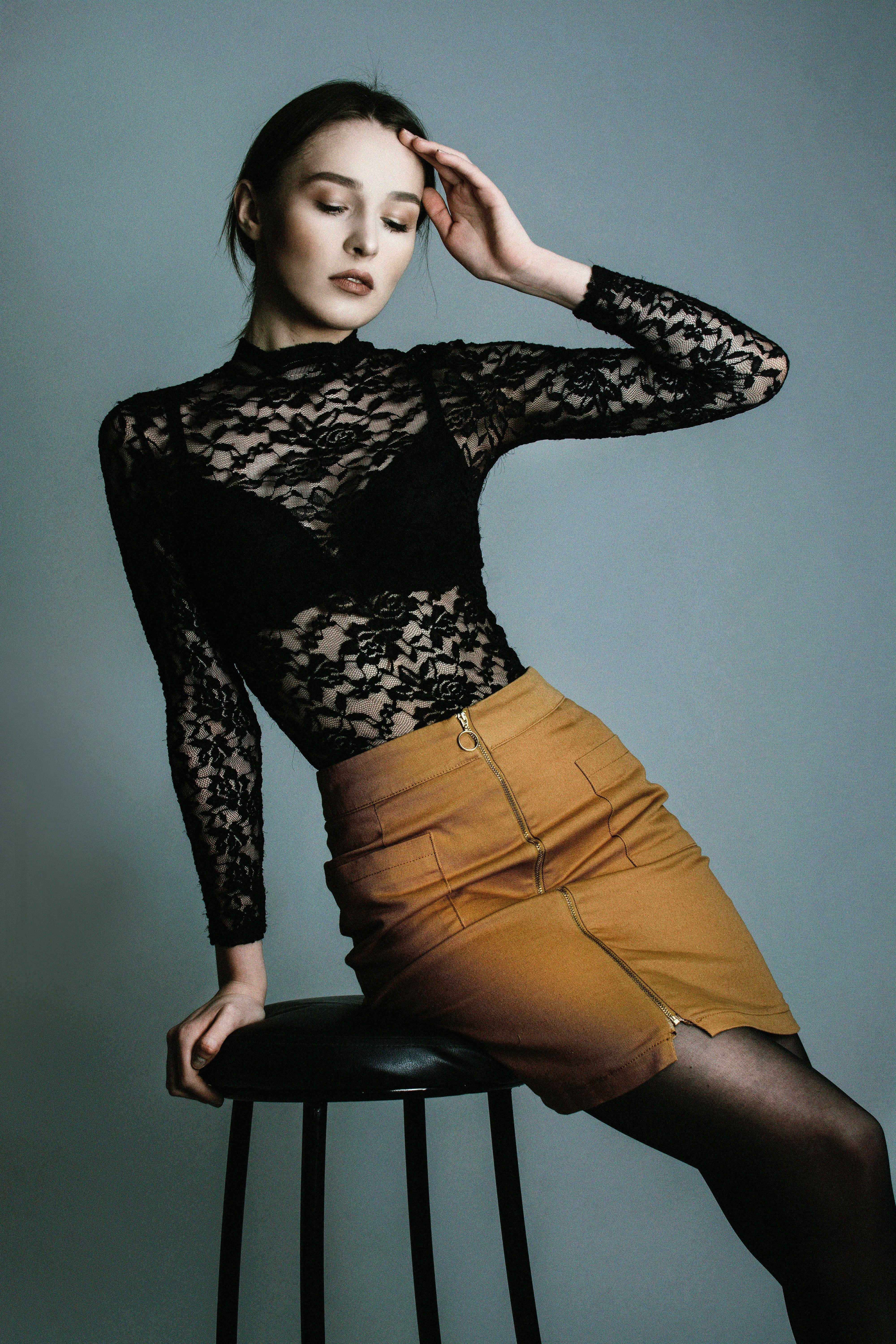
The ratio for outfits under this rule is 2:1. Two-thirds of an outfit is made up of one piece of clothing, and the remaining third is made up of another piece of clothing. For example, a crop top paired with a high-waisted skirt or pant. Another example is an oversized sweater to the hip worn with a longer pencil skirt below the knee, or even a short skirt allowing the legs to be the 1/3. For a knee length dress, the ratio is achieved naturally because 2/3 of the body is covered by the dress and the legs account for the bottom third proportion. Adding a cropped jacket or cardigan to a long dress creates the 2:1 ratio. Layering is one way to achieve this ratio, adding belts is another. So, when in doubt, tuck in that shirt or blouse lest you cut your proportion to 1:1!
The ratio rule applies to your outfit before your coat. Generally, a coat can be any length without disturbing the proportion of the outfit underneath.
Now, you won’t be able to unsee this rule.
Never 2 without 3
One more rule of 3 is attributed to Ralph Lauren’s style philosophy which is that every outfit should have 3 key pieces. One should not wear just a top and bottom, but layer on a third garment to look polished and complete, like a blazer, cardigan or vest. The third piece does not have to strictly be apparel, accessories count. A belt, scarf, or hat can be a key piece of a look. A statement piece of jewelry would also create the desired effect of a dimensional and complete look that is refined. Three key pieces is the minimum to achieve this elevated style.

The 5-5-5 Rule is a guideline for creating a capsule wardrobe. This one is for minimalists. The rule has one comprising a seasonal wardrobe limited to 5 tops, 5 bottoms, and 5 outerwear pieces. The idea is that many outfits can be made using a combination of these pieces creating an effortless style. Within these buckets of 5, the tops should include a white shirt, a silk blouse, a neutral color sweater, a fitted t-shirt, and a statement top showcasing your personality. The bottoms recommended are tailored trousers, classic jeans, a skirt, a wide-leg pant, and classic straight-leg trouser. The outerwear pieces elevate and layer the looks. These should include a structured blazer, a trench coat, a neutral color wool coat, a denim jacket, and a cardigan.
If I were following this rule, I would have to add 5 dresses. What’s a wardrobe without dresses?
5 4 3 2 1 Wardrobe
Pack like a professional traveler following the 54321 wardrobe rule. This is a simple packing rule that has been tested by many and found to be true.
5 tops, 4 bottoms, 3 pairs of shoes, 2 layering pieces, 1 dress
Apparently, 60 different combinations can be made from this capsule wardrobe breakdown, if the pieces selected can go together easily.
Depending on the destination and occasion, modifications to some categories are obvious. Two swimsuits or two jackets can be swapped for the “2 layering pieces”. There are many slight variations of this method online. The basic principle stands for the assortment of clothing for a traveling wardrobe. Remember, you still need to leave room for accessories, undergarments, sleepwear, and toiletries.
It is suggested that this system will cover you for a one-to-two-week trip, though some modern minimalists on Reddit are claiming to have traveled with ease for 3 weeks with just a carry-on bag using this method.

The 7 Point Rule
This fashion styling method takes the visual impact of each garment and accessory and assigns either 1 or 2 points to it to reach a total of at least 7 desired points (but no more than 10 points) for a complete look.
The goal of this rating system is to create an outfit that is balanced, neither underwhelming nor over-the-top. It is a helpful benchmark to keep in mind.
Here is how it works:
Basics= 1 point
Statement pieces=2 points
Basics include neutral color pieces and common or standard items. For example, a pair of jeans, black boots, a plain t-shirt, a solid blazer, gold hoop earrings, or stud earrings, would each be 1-point items. Hair accessories, sunglasses, hats, jackets, and belts are also basic items if they are simple, plain, or not embellished.
A statement piece is one that draws attention to the outfit like a bold print, texture, color, or material. A basic item can be elevated to a statement piece if it is made in a graphic print, or has details that make it stand out instead of blending in. If it shows extra personality, consider it a statement piece.
There is a disclaimer with this rule. It is a guideline for yielding a balanced look. It makes no claim that the finished look will end up tasteful.
Popularized and spread over social media in the last two years, many stylists today strongly embrace this guideline and find it useful.
70/30 Rule
This numbers rule applies to your wardrobe rather than individual pieces and dictates that 70% should be classic and 30% trendy. This balance results in a highly functional wardrobe. In the category of classic pieces are the essentials and basics of your wardrobe, neutral pants and skirts, jeans, well fitted tops and blouses, reliable layering pieces, tailored jackets, basic knits and sweaters. The trendy portion are the statement pieces that add interest and reflect your personal style. These pieces could be bold prints, strong colors, and textures, and fashion forward silhouettes. Cocktail, evening wear, and special occasion pieces fall into the 30% category.
If you have a full closet but nothing to wear, this may be the guideline you want to use to edit your wardrobe. It is an effective method for decluttering a closet and curating a wardrobe that produces quick outfit options. This guideline helps curb impulse buys and leads to intentional shopping.
What can be distilled overall from the plethora of fashion rules floating out there on social media and the fashion world today from stylists, influencers, fashion editors, and designers is that the proper fit of a garment is paramount to looking well dressed. Focusing on quality over quantity is essential. Whether you follow or break the rules, good taste never goes out of style.
%20like,%20no%20wearing%20white%20after%20Labor%20Day.%20%C2%A0Color%20matching%20your%20handbag,%20belt,%20and%20shoes%20was%20imperative%20for%20a...)